← All Projects

Balloons
Designing and building an advanced balloons system.
John Archer
Project Lead
Overview
The Balloon Projects team at SSTA is a collaboration with the University of Tennessee’s Amateur Radio Club to develop scientific balloons and the payloads that they have onboard. This project gives new and returning members of both clubs experience with electronics, balloon flight simulations, lightweight design considerations, a broad range of scientific payloads, and long-range data transmission via radio.
Key Systems
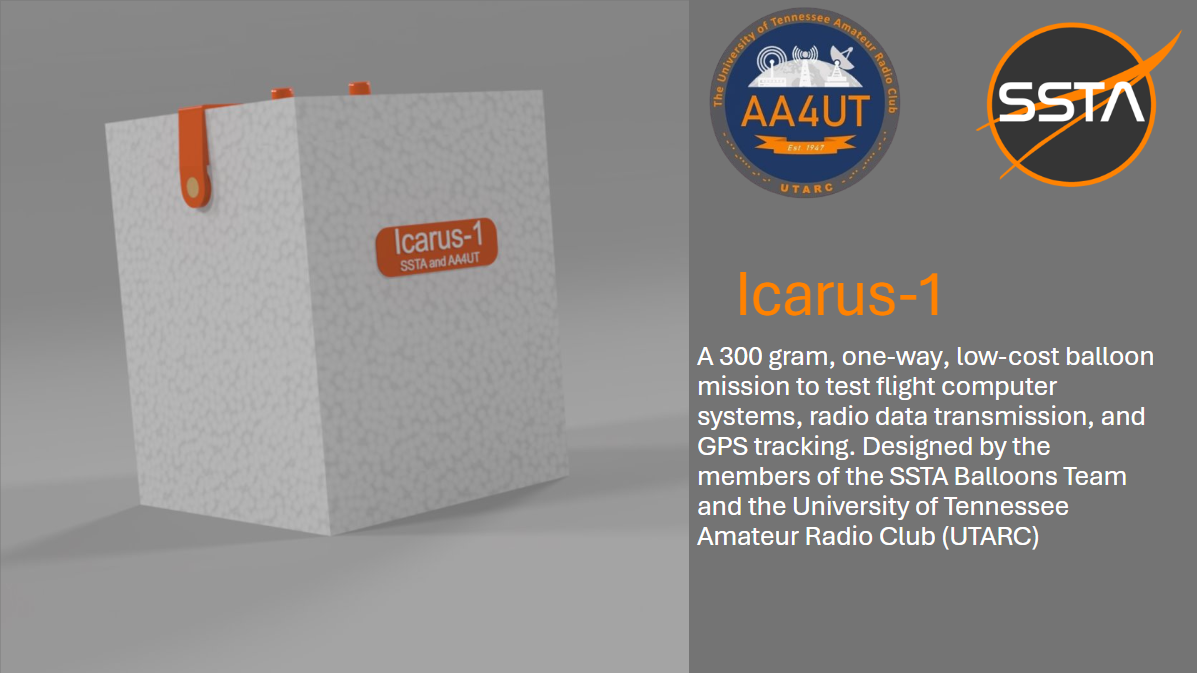
- Payload Gondola: The payload gondola is the portion of the balloon where the flight computer, scientific payloads, and radio are stored. The outer walls are made of styrofoam because of its good insulating properties and low density, and the internal structure and mounts for the payloads, flight computer, and radio are 3D printed out of impact resistant ABS plastic to allow for the use of mass-saving geometry.
- Flight Computer & Avionics: The flight computer is the brain of the scientific balloon. It receives data from the balloon’s instruments, stores this data, transmits it through the balloon’s radio, and overwrites it with new data. The flight computer utilizes a lightweight microcontroller such as a Raspberry Pi Pico or Arduino Nano, and a GPS module to track the balloon’s location.
- Radio & Antenna: The balloon’s radio allows for scientific data collected in the upper atmosphere as well as the balloon’s position and altitude to be transmitted to our ground station. Position and sensor data will be transmitted on 2 m APRS for short flights over the United States.
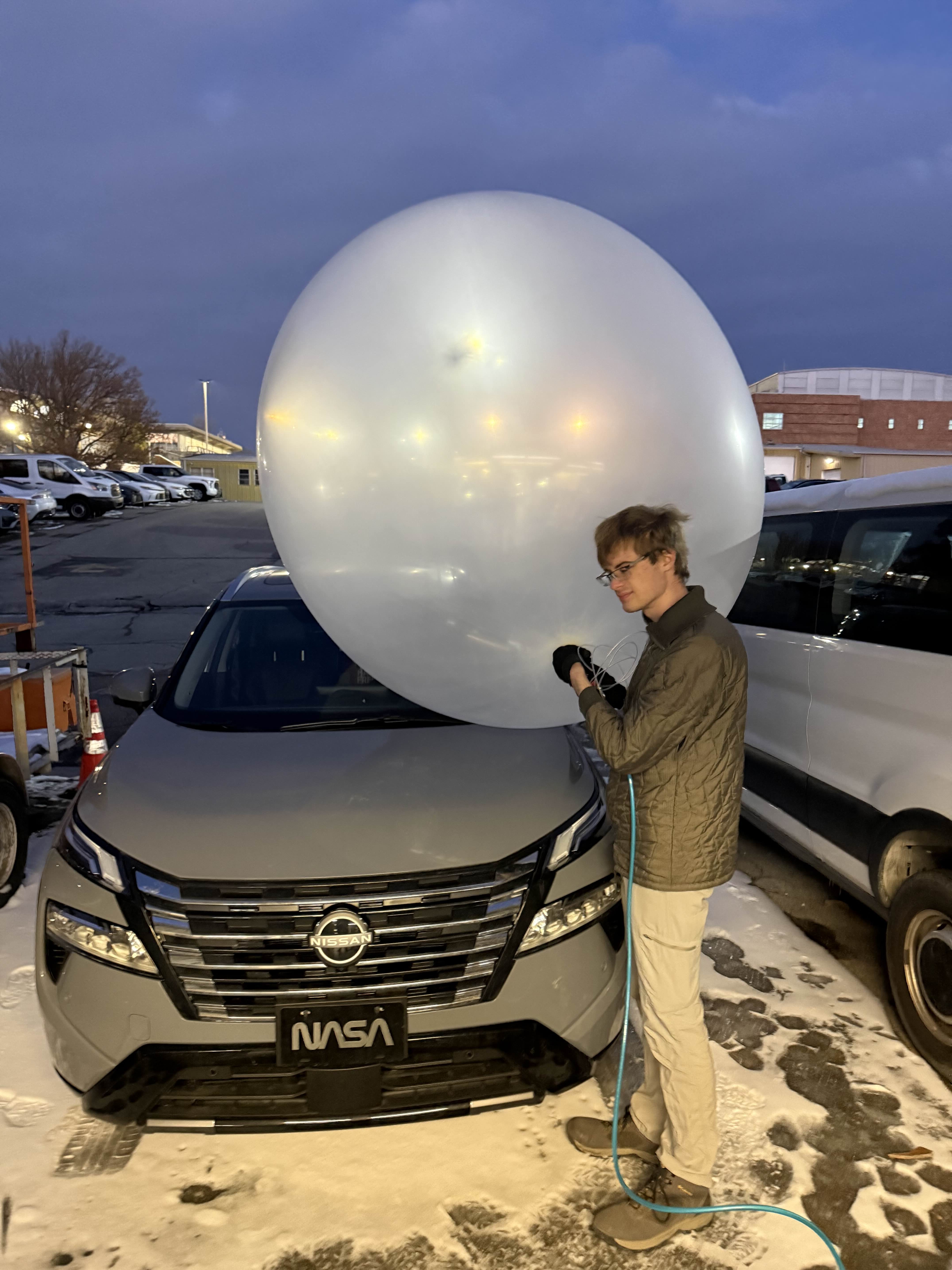
- Ground Support Equipment: GSE includes everything we need on the ground to launch the balloon and pick up the signal from its radio while it is in the air. We use a variety of equipment to prepare the balloons at the launch site that includes helium tanks, regulators, fill tubing, tarps, PPE, and safety lines. Our radio ground station will have omnidirectional and directional antennas, and a computer to serve as an IGate and monitor live APRS maps to track the balloon and store its data.
- Recovery System: Our high altitude balloons will use a lightweight parachute that we modify for use on balloons to slow their descent to a safe speed, and allow us to recover the balloon payload after the balloon bursts.
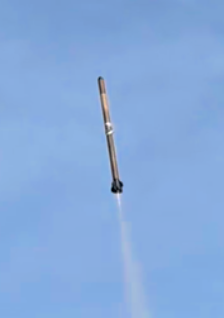
- Payloads: Our members have come up with a lot of ideas for different scientific payloads that could be flown on balloons. These include a small wind power generator, model rockets, action cameras, petri dishes filled with yellow slime mold, and various sensors to measure temperature, humidity, speed of sound, atmospheric composition, cosmic radiation, and monitor our payloads.